how to unfuck your sinuses
09 Jun 2025
Obligatory Disclaimer
I am not a doctor. This is not medical advice. Consult with your doctor before attempting anything mentioned below. This is a summary of my experience and advice for what you should do after you totally talk to your doctor first. It’s possible I got some details wrong. It’s possible many conclusions from my samplesize n=1 anecdotal experiences are wrong. Feel free to correct me if so! And talk to your doctor.
What is This?
In short, this is an attempt to summarize some techniques for dealing with uncooperative sinuses and immune systems resulting in chronic sinusitis, but also applicable to more subtle “allergies” as well. A number of friends/family have had problems like this. I’ve had them particularly badly over the course of my life. None of this is foolproof, and I don’t always even abide by my own advice and still deal with recurring (now, much more minor) problems like sinus infections.
My Story
- As a kid, I was "allergic" to a lot of things: milk, grass, dogs. All pretty much went away (or i "got used to it", who can say) with later childhood/early adolescence.
- Age ~16: I have my first incidence of urticaria (hives) in class. Ran to class late, hot classroom, hives developed.
- Started happening more often: triggered by any of: heat, cold, exercise, stress, or ... nothing in particular at all. Diagnosed with "allergies". Started taking daily first-gen antihistamines available at the time: diphenhydramine (benadryl), hydroxyzine, etc. First really bad anaphylactic reaction happens at soccer practice (coach tells me to "walk it off" -- good times). I start to learn to avoid triggers and mostly manage.
- Age ~19: off to 2nd attempt at college, switch to seldane (terfenadine, now off market). first actual allergy test, results: allergic to everything, including the saline control group. Welp. No real treatment beyond vague diagnosis of chronic cholinergic urticaria (this is doctor for speak for: gets hives, idk why). At some point around this time I eventually switch to zyrtec (cetirizine, a drug I still take to this day, for better or worse), which despite not being OTC and $2/pill was still worth it because it's not debilitatingly sedative.
- Age ~20: against my better judgement, go play a pickup soccer game on a hot 90+F summer day. break out in hives, attempt to cool down on the sidelines. notice my tongue is starting to swell, individual hives are starting to inflame into giant wheals. go to ER. triaged as throat started swelling, but no epinephrine required. started carrying an epipen for a few years but never had to use it (thankfully)
- Age 23: By now my sinuses are basically constantly clogged entirely. I stupidly think it's normal. (Because I have "allergies"!) I start blowing out discolored snot and hunks of weird spongey brown stuff (sorry for TMI but nothing about this experience is pleasant).
- I finally go see allergy specialists at a local allergy/sinus place. I get a CT scan. doctors are horrified. My sinuses were basically completely clogged with a combination bacterial/fungal sinus infection. massive polyps, septum severely diverted, sphenoid sinuses basically don't exist anymore, etc etc. So, after a massively powerful round of prednisone and antibiotics -- on the theory that not only was this infection horrible, it's probably responsible for the urticaria, they pencil me in for surgery ASAP: polyp removal, ethmoidectomy, sphenoidectomy, septum correction, etc. Lifechanging. When they finally removed all the packing gauze and dosed me with afrin (more about this later), it was basically the first time I breathed through my nose in probably 5 years. Turns out that's not normal!
- Despite lifechanging (literally) improvements from surgery, urticaria and occasional sinus infections persist. my ability to prevent/deter and manage the infections improves (more on that later, the main point of this post).
- Subsequent followups to specialists occur. Do I have lupus? Maybe gleevec (Imatinib Mesylate -- a drug regulating eosinophil production used to treat leukemia patients) will work? Do I have leukemia?! (i did not have leukemia) Nothing really helps or changes except for ongoing treatment. Symptoms persist but have diminished somewhat with later adulthood -- partially because I've learned what not to do and how to manage it.
Some Background
I will try to avoid deep detours into medical/scientific jargon. I’m not a doctor, much less an immunologist, so if I try to get the details right, I probably won’t. I will try to keep this as layman’s perspective as I can.
- First, when you’re sick, in general, what does it mean to be congested/”stuffed up”? Does it mean your sinuses are literally just full of snot which is why you can’t breathe? Well, sometimes, sorta. Usually no. More often what’s happening is that the mucus membranes in your sinuses are inflamed due to infection/allergy – so it’s less that your sinuses are literally full, and more that they are so inflamed that whatever gunk (often-infected) is up there can’t get out. This is an important first baseline consideration in treatment. Why does the tissue swell? Isn’t that counterproductive? I have no idea, it just does.
- What are “polyps”? When mucus membranes get inflamed repeatedly, they can uh .. begin to stay that way. Nasal polyps are basically entirely benign growths of the mucus membrane starting to expand outwards and clog up your sinuses.
- What is a sinus infection? It’s when bacteria (or fungus!) get nestled comfortably in your sinus cavities and begin growing. Inflamed mucus membranes in your sinuses compound this problem by not letting your body evict the invaders.
- Why are some people more “allergic” or prone to sinus infections? I don’t know. I suspect on some fundamental level, no one knows. Auto-immune systems are complicated. But you can talk to doctors about that – this post is about palliative treatment, not fundamental understanding or cure.
- How do you know if you have a sinus infection vs a cold? Some of the symptoms can be the same – sinus congestion/headache, maybe (less commonly in my experience) a slight fever. Cold/flu/etc viruses are systemic infections, so you’re more likely to have a fever, full-body aches and so on. Sinus infections on the other hand are localized in your head. Runny nose tends to be less common, and the symptoms can be much more subtle: fatigue/malaise, headaches, sinus pressure (this is a big one), blowing out miscolored (greenish usually) snot is the biggest indicator.
- How do doctors diagnose it? They are a variety of ways to confirm it more rigorously: endoscopy, swabbing & sampling to culture whatever might be infected, CT scans. But all that is expensive, and for something as common as a sinus infection, most doctor visits go like this: “Yea, doc, I have a headache and I’m super congested.” “Blowing out any discolored snot?” “Yeah, kinda greenish and gross.” takes your vitals, looks down your throat and up your nose “Okay, I’m gonna give you a [whatever antibiotic, usually a z-pack – a round of azithromycin antibiotic treatment].”
- The chicken/egg problem: are more systemic auto-immune problems causing allergies and sinusitis? or is chronic sinusitis kicking the immune system into overdrive resulting in allergies/immune weirdness? In the entire course of trying to treat my various ailments, that question was never really answered. For most of my issues I was forced to just directly preventing/treating the results (chronic inflammation and infection).
The main takeaway from all of this should be that the 2 main enemies are: inflammation and infection. Both need to be treated in conjunction.
Inflammation and Congestion
So how do we reduce nasal/sinus inflammation and congestion? A variety of ways, in rough order of triviality, powerfulness, and side-effects from least to best/worst:
- Basic NSAIDs (non-steroidal anti-inflammatory drugs): ibuprofen, aleve, et al. The same drugs you take when you have a twisted ankle or pulled muscle. These are somewhat effective in also reducing sinus inflammation.
- Nasal corticosteroid sprays: There are many of these (flonase and nasonex being two of the more popular). Formerly prescription, these sprays are mostly now OTC and they are nasal sprays that deliver localized corticosteroids that over time can help reduce inflammation. They generally require repeated administration to start helping, vs more quick-fix nasal sprays (see below in “What NOT To Do”)
- Antihistamines: There are a billion options here, and everyone responds to antihistamines differently. The reason they can help with inflammation is outside the scope of this, but there’s a reason they’re useful for treating allergies. I take zyrtec (cetirizine) daily, because it doesn’t make me drowsy – other people report the complete opposite. You can experiment a little and see what works for you. If you’re still under the impression that benadryl is the best go-to antihistamine, please re-evaluate. Benadryl is a very powerful first-gen antihistamine with a lot of side-effects (extreme sedation, grogginess next day, etc). It’s like using a sledgehammer to smash a fly. But, again, everyone’s body is different. I’d also add a disclaimer that while antihistamines are useful in treating allergies, histamine itself is actually a very powerful neurotransmitter and I think there are a lot of unknowns about the effects of prolonged usage over years. I’m certainly not happy about having been on zyrtec every day for the last 15 years, but it is what it is.
- Sudafed (pseudoephedrine): Despite being non-prescription, pseudoephedrine is a powerful drug. It’s a sympathomimetic amine and can be a precursor to meth, so don’t treat this drug lightly in either its ability to alleviate inflammation or its potential side-effects. It works because among other things, it’s a powerful vasoconstrictor – that is, it reduces blood flow (in general, but in your sinus mucus membranes as well). It’s one of the more powerful options to open up your sinuses for drainage and elimination of the actual infection (covered below). It’s not without downsides: all your other blood vessels get constricted too, leading to unpleasant side-effects: cold/clammy hands, sweating in general (not sure why), and high blood pressure. Repeated use can lead to dangerous blood pressure problems. I don’t take it anymore for that reason, but it was a go-to choice for me when my problems were much worse.
- Prednisone: This is an odd but important one to include, because prednisone works differently than NSAIDs. It’s a corticosteroid (as with the above nasal sprays, but more powerful) and it works in part by suppressing your immune response. It does reduce inflammation directly too, but mostly it tells your immune system to stfu and stop telling your mucus membranes to swell up. Isn’t “immune suppression” precisely what you don’t want when you’re fighting an infection? Yes! Which is why you will rarely be prescribed (yes, this is prescription only) prednisone for sinusitis issues without a corresponding round of antibiotics at the same time. It’s basically a double-tap strategy of telling your body’s immune system to take a step back so the antibiotics can do their thing. This drug is also not without its side-effects: when i was younger it affected me like a massive stimulant of sorts – like being on speed or something. (I’ve never been on speed, but..). On a strong round of prednisone I’d be the most accomplished person in the world, staying up all night plowing through house chores, work, car maintenance – you name it. I loved it, tbh. These days when I have to resort to taking it (rarely) it just makes me extremely irritable and angry. Not great.
- Honorable mention: guaifenesin (aka mucinex). The drug I will literally never remember how to spell. This isn’t technically an anti-inflammatory drug at all, but I’m putting it here because it kindof works backwards to achieve the same effect. Guaifenesin is basically a mucus-thinner. So while prednisone or pseudoephedrine work to reduce inflammation so that snot/infection can drain, this comes at it the other direction by thinning the mucus so it can more easily drain or be blown out. It’s usually marketed for chest infections/congestions/coughs, but in my experience it works to great effect in clearing your sinuses. I don’t take pseudoephedrine at all anymore, and if I feel a hint of a sinus infection coming on, this helps quite a bit (along with other things, see below re: Maintenance).
What NOT to do
- Don’t bother with the Sudafed (or other generic) decongestants that you can buy without getting it from behind the pharmacist counter (and signing away your first-born to get it). These don’t contain pseudoephedrine at all and instead are a repackaging of the famous little red pill to contain phenylephrine instead of pseudoephedrine in an attempt to curb abuse of pseudoephedrine as a precursor to meth production. The downside? Phenylephrine does nothing orally for inflammation. At all. It’s a sleight of hand to keep sales up.
- There are two very common nasal sprays that you’ve likely seen before everywhere – grocery stores, truck stops, etc: Afrin (oxymetazoline) and 4-Way (phenylephrine). Phenylephrine, despite being useless orally is quite a powerful topical/local anti-inflammatory, as is oxymetazoline. They provide near instant relief as your mucus membranes instantly shrink, allowing you to breathe. The downside? They both are short-lasting and result in immense rebound inflammation – i.e. once the drug wears off, the inflammation comes back even worse than before. Please, I’m BEGGING you: do not use these. If they’re in your house, throw them away. Don’t cave into temptation, it’s just not worth it. You can get into a very bad cycle of addiction – understandable, since being able to breathe is quite nice. But these sprays do nothing to fix the actual problem and actually make it worse. I’ve resorted to them in extreme desperation in the past, and almost always regretted it, and it was when I had a very bad sinus infection that was ruling out being able to sleep at all, but couldn’t get to a doctor to treat it properly. If you absolutely must use it, one technique to compensate for the rebound inflammation is to do one nostril at a time, allowing the other side of your sinuses to compensate for when the inevitable rebound inflammation comes – making it easier to taper off use. But please, really. Just don’t. Don’t use them.
- Did I mention not to use Afrin or 4-Way? Okay then.
Infection
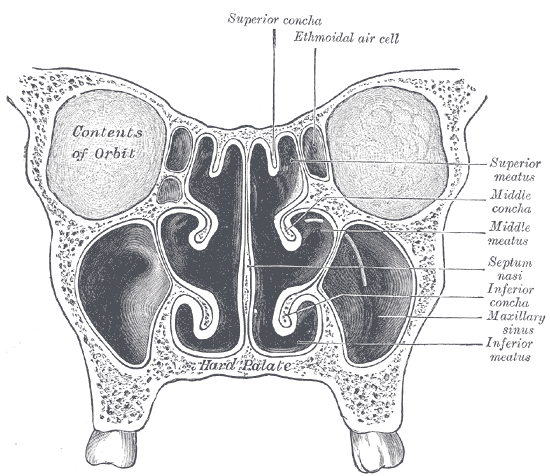
- Sinus irrigation: This is a surprisingly controversial topic given its simplicity. Sinus irrigation is a process by which you run (neti pot) or force (squeeze bottle) warm water (usually with sodium chloride + sodium bicarbonate dissolved to make it not hurt like hell) in order to flush out snot and infection. Sinus geography is surprisingly complex (especially if you have an auto-immune issue causing constantly swelling) so it’s an easy place for bacteria to take hold. Simply flushing it out with water seems like a pretty good option. I prefer a squeeze bottle because the little extra force you can apply can help flush things. So why is it controversial? Two reasons: media fear exaggeration and a real (and in my opinion minor) risk.
- The media-driven fear angle is basically that over the years there have been a few isolated cases of amoeba infections from unfiltered or contaminated tap water. Here’s one from 2018 and another from 2023. You’ll note that despite the scary headlines both articles add a small caveat that they were never able to confirm the infection came from the tap water. One other earlier case a few decades ago involved a woman literally using a homedug well near a bog or something. Anyway, use your own discretion and use purchased distilled water or take efforts to filter your own water if you’re concerned.
- The other aspect is that (as I mentioned above) sinus geography is complex, and it’s just as easy for water to get stuck up there as it is for your own mucus and infection – the result being little pools of water in your sinuses that actually provide further ideal breeding grounds for bacteria. My allergy/sinus specialist literally had posters warning people not to use neti pots because of this extreme risk of making the infection worse. None of this is untrue, but it’s been my experience that if you just acknowledge this fact and take extra care to drain your sinuses, there’s no problem. It involves some pretty silly poses over the sink, tilting and headbanging to make sure the water drains, but it works. I also don’t do a sinus rinse close to bedtime, so that for at least a number of hours I’m upright and moving around, further giving any remaining water a chance to drain. I felt somewhat betrayed by how amazingly well sinus irrigation helped me kill sinus infections without resorting to antibiotics, despite the dire warnings of my doctors. I won’t put on my tinfoil hat here, but one can imagine misaligned incentives where they’d rather have you coming in for repeated visits for Professional Treatment vs something you can just do at home.
- And of course: Antibiotics. Antibiotics of course are the nuclear option to eliminating an infection, and if you don’t get sinus infections often, it’s the easiest and most foolproof option. It’s not without downsides, of course: many antibiotics nuke your microbiome everywhere else in various ways resulting in e.g. gastro-intestinal unpleasantness. Many people are allergic to various antibiotics (augmentin gives me nightmareish headaches and nausea, e.g.). If you do get them often, repeated dosing with antibiotics compounds this unpleasantness, and also runs the risk of bacteria-resistance in the case that a particular antibiotic stops working as well and you have to switch them up, etc. And in general, overprescription of antibiotics is a problem world-wide. My reasons for being unwilling to resort to antibiotics are not particularly altruistic (mostly i just hate being sick and/or dying), but not contributing to this general problem is a nice side-benefit.
Maintenance
So assuming you don’t have a sinus infection currently but you’re prone to it. What are some common strategies to prevent them?
- Regular use of corticosteroid nasal spray(s) as mentioned above. Even if you’re not sick, if you’re prone to allergies/sinusitis, these nasal sprays can be used ongoing to help prevent inflammation and thus infection.
- Other nasal sprays: I won’t go into everything that’s out there (talk to your doctor), but I stumbled across a nasal spray via my doctor years ago called Azelastine – it’s basically a topical antihistamine in nasal spray form. It seems to help a lot, mainly by helping my sinuses stop making so much dang mucus to begin with.
- Sinus irrigation as mentioned above: you don’t have to do it regularly, though it can’t hurt. If you feel particularly congested/snotty or it’s a bad pollen day, it can often help.
- Avoid things that are inflammatory. I don’t dare get into this because it varies wildly on an invidual basis from things fairly well agreed upon (alcohol intake) to legit/suspect but not confirmed (gluten intolerance, various food allergies) to straightup woo theories for why people think they’re prone to inflammation. Alcohol is a pretty big one though, alas.
More Drastic Measures
There is, of course, the nuclear option: surgery. As I mentioned in my story above, sinus surgery for me was a lifechanger, but not a cure-all. It’s something obviously you have to talk to a doctor about. A CT scan will reveal the extent to which it’s necessary or will help. Surgery options these days are also far and away better than they were when I had mine. From what I understand, the recovery is very minimal now (vs my surgery which required like a week of recovery time with my sinuses full of packing gauze and stents and lots of nausea-inducing opioids for pain).
Conclusion
That’s it! I hope this helps. Don’t use afrin.
The phenylephrine thing is worth highlighting because you were ahead of the news cycle on this. The FDA advisory panel voted 16-0 in September 2023 that oral phenylephrine is no better than placebo, and the FDA proposed pulling it from the approved monograph. And yet – as of right now – Sudafed PE is still on shelves. The regulatory process is that slow. So you’re right that it’s a scam, but “sleight of hand to keep sales up” makes it sound like a conspiracy when it was really just decades of regulatory inertia. The FDA approved it under old evidence, the evidence was overturned, and the bureaucracy hasn’t caught up yet. Less sinister, more depressing.
The neti pot section still bugs me though. Your own specialist had warning posters on the wall. You acknowledge the real risk of water pooling and breeding bacteria. And then you wave it off and hint that maybe the doctor’s incentives were misaligned – “I won’t put on my tinfoil hat here” followed immediately by putting on the tinfoil hat. For what it’s worth, the CDC and ENT professional organizations still endorse sinus irrigation as safe with proper water (distilled or boiled). So you’re not wrong that it works. But the way you got there – dismissing your specialist’s concerns as possibly financially motivated – is the kind of reasoning that leads people to worse places.